The Evolution of Gaming: From Consoles to Cloud Gaming Services
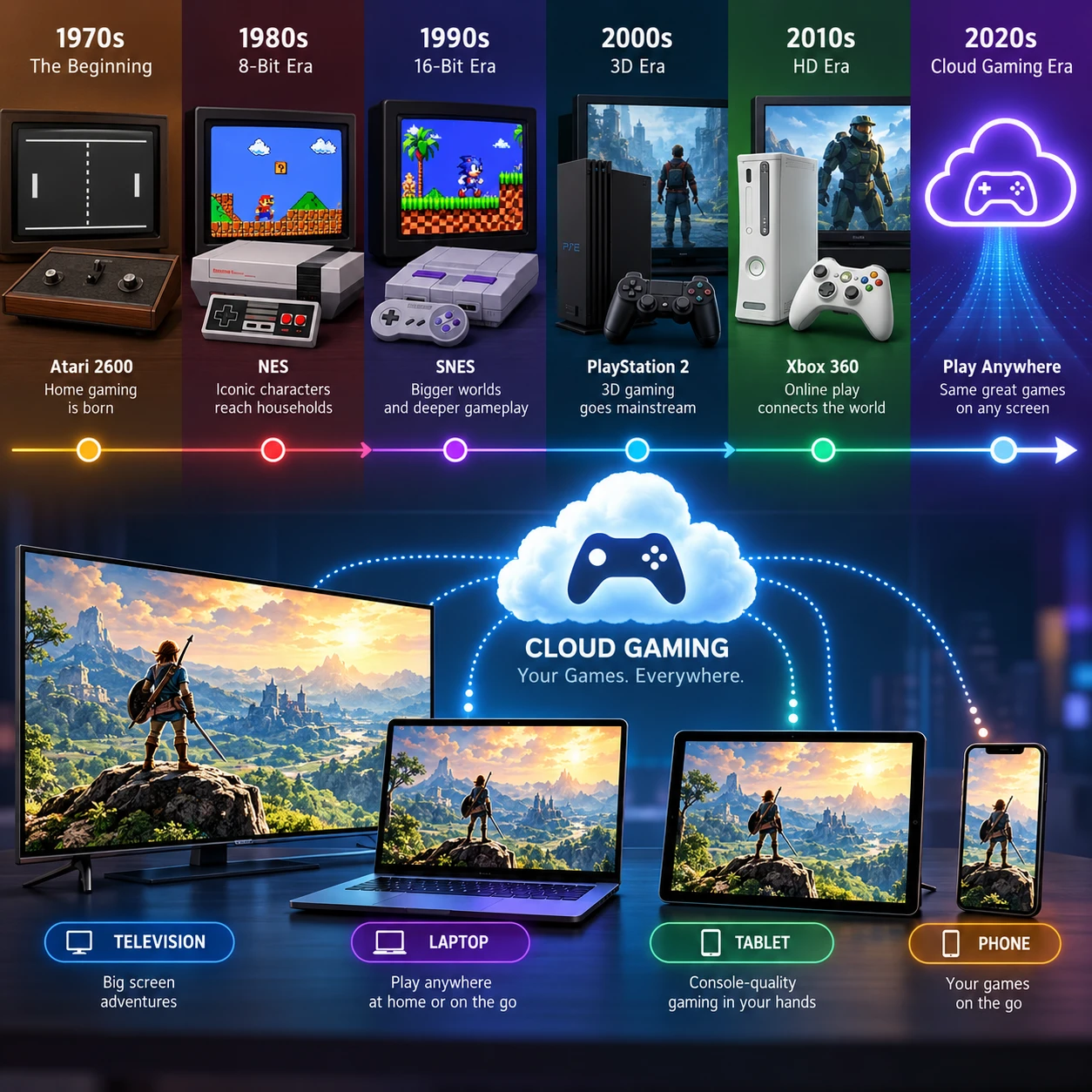
Gaming has changed from a pastime built around a dedicated machine in the living room to an experience that can be streamed across connected devices. That change affects more than how people play: it influences game discovery, audience reach, subscription models, and the ways advertisers can appear in gaming environments.
The shift is not a simple handoff from consoles to cloud gaming services. Consoles remain important, while digital distribution and game streaming add new ways to reach players. Understanding how each stage developed helps media and advertising teams see where access is expanding, and where practical limits remain.
Gaming’s console era
Video game consoles made gaming easier to access by combining purpose-built hardware, controllers, and games in a system designed for the television. They gave players a consistent way to play at home and helped establish gaming as a mainstream form of entertainment.
Early consoles tied play closely to physical media, such as cartridges and discs. Players bought a system, selected a compatible game, and played it locally. The console handled the processing, so the experience did not depend on broadband internet or a remote server. That local setup offered predictable performance, though it also meant players needed the hardware and had to buy games in formats supported by that system.
Console makers built communities around their platforms through exclusive titles, recognizable characters, and multiplayer features. A new generation of hardware could improve graphics and processing, but it also created a barrier: players often had to purchase a new console to access newer experiences. For game publishers, a platform’s installed base shaped which audiences they could reach.
That model established habits still visible today. Many people prefer a controller, a large screen, and the reliability of locally installed games. Those preferences help explain why cloud gaming has expanded the options for play without making dedicated consoles irrelevant.
The shift to digital distribution
Digital distribution changed how players find, buy, and access games by moving delivery from store shelves and physical discs to online storefronts. It also gave publishers a more direct way to update games and communicate with players.
As broadband internet became more common, console and PC users could download full games, patches, and add-on content. Online services introduced game libraries, multiplayer networks, wish lists, and recommendations. Instead of browsing only what a local retailer stocked, players could discover a much wider catalog from their devices.
Digital distribution altered the business relationship between a game and its audience. Updates can keep a title active after launch, while downloadable content and live services create ongoing reasons to return. Subscription models take the idea further by offering access to a rotating or expanding library for a recurring fee. They lower the cost of trying several games, but access may depend on an active subscription, and a title can leave a catalog.
For media companies and advertisers, online storefronts and connected games also create more points of contact. Discovery can happen through recommendations, creator coverage, social platforms, and in-game events. Those channels may influence interest, but visibility does not guarantee a purchase or sustained play.
How cloud gaming works
Cloud gaming runs a game on a remote server and streams the resulting video and audio to a player’s device. The player’s inputs travel back over the internet, allowing a phone, computer, or television to act as a screen and controller rather than doing all the game processing itself.
This is similar to watching a video stream, with one important difference: a game must respond to inputs in real time. The service receives button presses, processes them on a server, and sends the updated picture back. As a result, the quality of the experience depends on the whole connection between player and server, including bandwidth, latency, network congestion, and the service’s available data centers.
Broadband internet is central to the model. A stable connection can support a clear stream, but a fast connection alone does not guarantee responsive play. A long network route or busy home Wi-Fi can add delay. Fast action games are often more sensitive to that delay than turn-based games, where a small pause may matter less.
Cloud gaming services may be offered through a subscription, a purchase-based model, or a combination. Some connect to existing game libraries; others provide a separate catalog. For players, the appeal is less reliance on expensive local hardware. The trade-off is dependence on internet access, service availability, and the provider’s catalog and policies.
Consoles and cloud gaming compared
The main difference is where the game runs: a console processes a game locally, while a cloud gaming service runs it on remote servers and streams the result. That distinction shapes convenience, connectivity needs, and the feel of play.
Console gaming can deliver stable performance without an internet connection for many single-player games, although online features and updates still require connectivity. A console also provides a consistent home setup, but players pay for dedicated hardware and may need to upgrade it over time.
Cloud gaming can let players use more devices and avoid a large upfront hardware purchase. It may also make it easier to try a game before committing to a full download. In exchange, play depends on a reliable internet connection and a service that supports the player’s region, device, and chosen game.
- Hardware: Consoles require a compatible system; cloud gaming shifts most processing to remote servers.
- Convenience: Streaming can reduce downloads and make device switching easier, while local play avoids stream setup and network dependence.
- Connectivity: Cloud gaming needs a stable connection throughout play. Consoles can support offline play for compatible titles.
- Player experience: Local processing often offers more predictable responsiveness. Streaming quality can vary with network conditions.
Cross-platform play complicates the comparison in a useful way. Players on different devices may join the same game, depending on the title and its policies. This can broaden a game’s community, but it does not mean every platform offers the same controls, performance, or access to content.
What cloud gaming means for audiences and advertising
Cloud gaming can broaden access by letting people play on devices they already own, while connected services create new ways to engage gaming audiences. For advertisers, the opportunity is more varied touchpoints, not a guarantee of larger reach or attention.
When a game no longer requires a particular console, its potential audience can include people using computers, televisions, tablets, or phones. That may reduce hardware as a barrier for some players. However, broadband availability, data costs, compatible controllers, and service coverage still influence who can take part.
For media planners, the growth of game streaming and connected play adds context to familiar channels. A player might discover a title through a streamer, join friends through cross-platform play, then encounter the publisher’s updates in a digital storefront. These moments can support awareness and participation, but they require distinct measurement: a stream view, a game session, and an ad interaction are not interchangeable signals.
In-game advertising can take several forms, including branded items, placements in virtual environments, sponsored events, and ads shown around game content. The right format depends on the game’s tone and audience. A placement that feels natural in a sports stadium setting may feel disruptive in a quiet narrative game. Advertisers should also consider age suitability, player consent, regional rules, and whether an ad can be measured without collecting unnecessary personal data.
A practical planning approach is to ask three questions: Which players can access the game? Where in their play journey could a brand add value? What evidence will show whether the placement worked? Those answers help separate meaningful engagement from simple exposure.
Challenges and what comes next
Cloud gaming still faces limits in connectivity, service availability, and player preference, so it is likely to coexist with consoles and locally installed games. The future will depend on whether streaming offers enough convenience without compromising the experience people value.
Internet quality remains uneven. Rural areas, shared networks, data caps, and peak-hour congestion can all affect play. Providers also need servers close enough to players to reduce delay, and a service may not offer the same games or features in every country. Catalog changes can add uncertainty for subscribers who want long-term access to a particular title.
Another challenge is control. A locally owned game can often be played as long as the hardware and software remain compatible. A streamed game depends on a provider keeping the service, license, and server infrastructure available. This does not make cloud gaming inherently unreliable, but it changes what access means: players may be paying for availability rather than keeping a permanent copy.
For publishers and advertisers, the next phase will likely combine local hardware, digital distribution, subscriptions, and streaming. Each model serves different needs. A console remains attractive for dependable home play; cloud gaming can reduce device barriers; subscriptions can help audiences explore larger catalogs. The most useful strategy is to design campaigns and services around actual player behavior, then test which format works for each audience rather than assuming one delivery model will replace the rest.
Frequently asked questions about cloud gaming
Cloud gaming streams a remotely running game to a connected device, and its value depends on the player’s connection, service, and preferred way to play. These answers address the most common questions about how it fits alongside consoles.
What is cloud gaming?
Cloud gaming is a way to play video games that are processed on remote servers and delivered as an interactive stream over the internet. The player sends controls back to the server, which updates the game and streams the result.
Do cloud gaming services replace consoles?
No. Cloud gaming services offer another way to access games, but consoles remain useful for local processing, offline play in supported titles, and players who prefer dedicated hardware. The two models can coexist.
Does cloud gaming require fast internet?
It requires a stable internet connection with enough bandwidth for the service’s chosen video quality. Low latency and a reliable home network matter too, especially for games that depend on quick reactions. Check the provider’s current requirements because they vary.
How could cloud gaming change advertising?
Cloud gaming may increase the range of devices and connected moments where players encounter a game or brand. It can support in-game advertising, sponsored experiences, and digital discovery, but campaigns still need relevant placements, audience safeguards, and clear measurement.