The Ethics of Deepfake Technology in Media and Entertainment
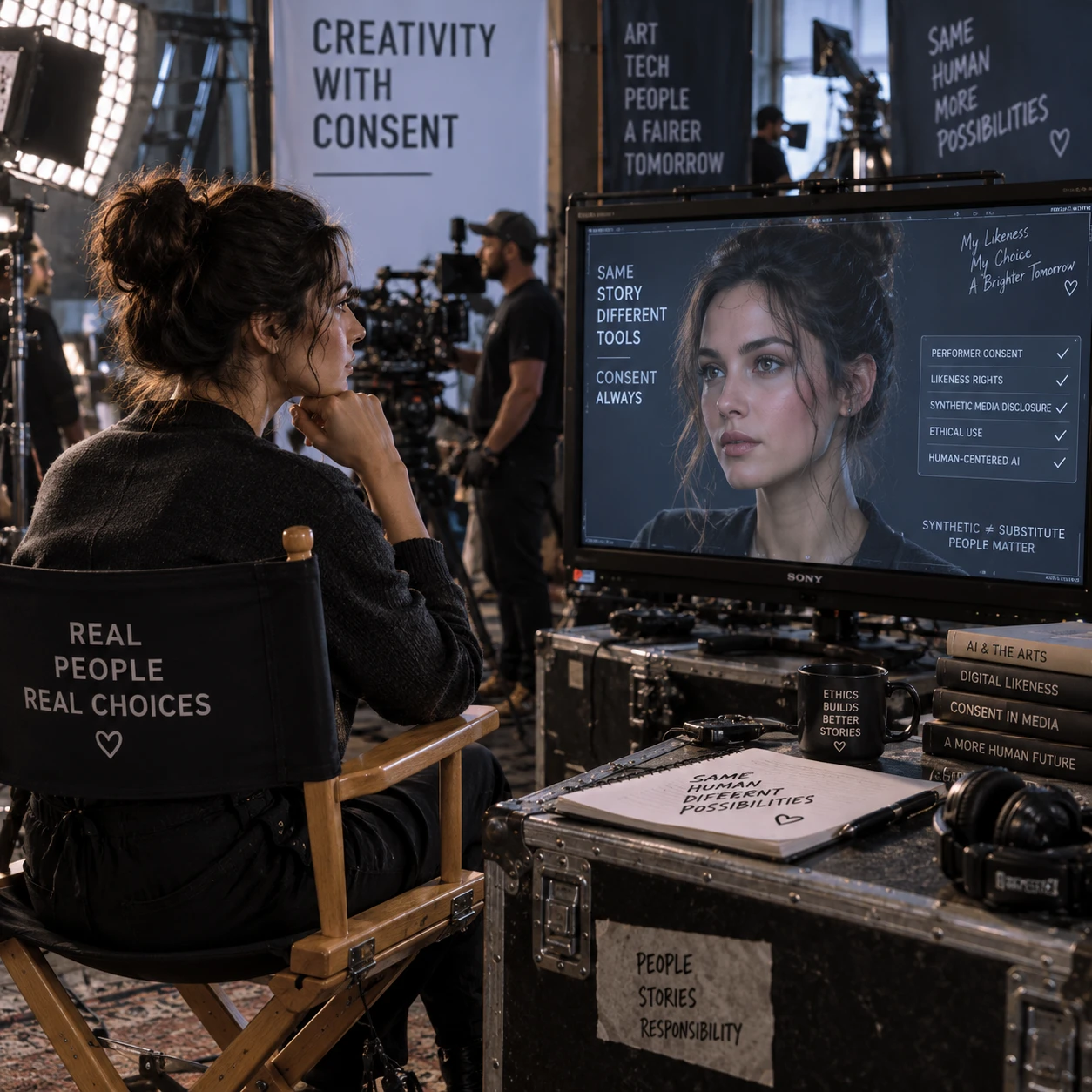
Deepfake technology can let a film restore a familiar voice, help an advertiser create a localized campaign, or place a performer in a scene they never filmed. The same tools can also reproduce someone’s face or voice without permission, making a fabricated performance feel authentic. For media and advertising teams, the ethical question is how to use synthetic media without undermining the people represented or the trust of the audience.
What deepfake technology means for media and entertainment
Deepfake technology uses generative AI to create or alter a person’s face, voice, or performance in digital content. In media and entertainment, it can support production, promotion, localization, and advertising, but its acceptability depends on how the likeness is used and whether viewers can understand what they are seeing.
Deepfakes are one type of synthetic media. The term covers digitally generated or altered images, audio, and video, including face replacement, voice cloning, and virtual performances. The category is broader than deceptive videos: a disclosed digital double used in a fantasy film is also synthetic media.
Production teams may use these tools to de-age a character, adapt dialogue for another language, or complete a scene when an actor cannot return to set. Studios and advertisers can also create alternate campaign versions or bring a fictional character into a new format. Those uses may save time or enable creative work that conventional filming cannot deliver easily. They still require decisions about permission, compensation, accuracy, and disclosure.
A useful first test is to ask what the audience believes the content represents. If it is understood as an openly fictional effect, the risk of deception may be lower. If it appears to show a real person making a genuine statement or endorsement, the ethical stakes rise sharply.
Consent, likeness, and control over identity
Ethical use of a person’s likeness or voice requires informed consent that clearly defines the purpose, scope, and limits of the synthetic performance. A general release may not explain every future use, so teams need specific approval for the context in which an identity will appear.
A face and voice are part of a performer’s professional identity. Likeness and publicity rights may offer legal protections, but laws vary by jurisdiction and situation; an ethical review should not treat legal permission as the only standard. This article is not legal advice. Production companies and advertisers should consult qualified counsel when negotiating rights.
Meaningful consent should answer practical questions before production begins:
- What is being replicated? Specify face, voice, gestures, or a combination.
- Where will it appear? Name the film, platform, campaign, territory, and intended audience where possible.
- How long can it be used? Set a term, renewal process, and limits on reuse or adaptation.
- Who approves the final result? Define a review point for material changes in dialogue, context, or appearance.
- How is compensation handled? Clarify payment for the initial use and any additional versions or future uses.
Consent also involves control after approval. A performer might agree to a carefully scripted digital cameo but reject a later edit that changes the meaning of the scene. Clear contracts should cover revisions, sublicensing, storage of training material, and procedures for addressing a use that exceeds the agreed scope. Involving performers early helps prevent a release form from becoming a substitute for a real conversation.
Deception, misinformation, and reputational harm
Deepfakes become ethically dangerous when they lead audiences to believe a person said or did something that never happened. Misleading synthetic media can spread misinformation, damage reputations, and make authentic recordings easier to dismiss as fake.
In entertainment, a fabricated scene can imply a performer’s endorsement, political opinion, or personal conduct. In advertising, a cloned voice may appear to recommend a product without the person’s knowledge. Even when a campaign is intended as satire or parody, audiences may see a short clip without its original context. Distribution can travel faster than a correction.
Harm is not limited to famous people. A person with less power or fewer resources to respond may face serious consequences from a fabricated intimate image, humiliating portrayal, or false claim. And once a synthetic video circulates, removing every copy may be difficult. Teams should consider both the direct subject and the people likely to be affected by the content.
Before publishing, ask whether an ordinary viewer could mistake the material for documentary evidence, a real endorsement, or an authentic statement. Consider the platform, editing, caption, and likely viewing conditions. A label buried in a description may not correct a misleading opening shot or an excerpt shared without context.
Creative opportunity versus ethical risk
Deepfake technology can expand creative choices and accessibility, while also increasing the risk of unauthorized identity use and audience deception. The ethical balance depends on context, consent, power, and how clearly the finished work signals that it is synthetic.
Potential benefits include preserving a performance for a clearly agreed production, supporting language localization, and enabling visual effects that would be impractical to shoot. Synthetic voice tools may also help create alternate versions of a performance, subject to a performer’s consent and control. These applications can be valuable, but convenience is not a sufficient reason to use someone’s identity.
Power differences matter. A major studio may have legal and technical resources to negotiate a deal, while an independent performer or a person depicted in an ad may have little leverage. Teams should examine who receives the creative or financial benefit, who bears the risk, and whether the person represented can meaningfully refuse.
A practical evaluation framework is the four-part context test:
- Purpose: Is the use artistic, informational, promotional, or commercial? Is that purpose clear?
- Permission: Did the person approve this specific kind of representation and distribution?
- Perception: Could a reasonable viewer mistake the content for a real event or endorsement?
- Power: Can the person represented review, negotiate, or challenge the use?
If a proposal fails on permission or creates a high risk of deception, teams should revise it, disclose it more prominently, or choose another creative approach. The framework is a decision aid, not a guarantee: a use may be legally permissible and still cause avoidable harm.
Practical safeguards for responsible use
Media and advertising teams can use deepfakes more responsibly by building consent, approval, disclosure, and accountability into the production workflow. The safest approach is to review the use before generating or distributing a synthetic performance, not only after a complaint.
Start with a written use case. Record whose identity is involved, the creative purpose, intended channels, audiences, and planned duration. Then confirm that the permission covers the specific work. If the project changes, such as turning a fictional scene into a product endorsement, return to the performer for renewed approval.
Use a review process with clear owners:
- Before production: Have production, talent representatives, advertising, and legal teams confirm scope and rights.
- Before release: Let the represented person review the final synthetic performance for material changes or misleading context.
- At publication: Add a clear disclosure in the content itself and, where relevant, in captions or accompanying copy.
- After release: Provide a contact and escalation path for concerns, corrections, or suspected misuse.
Contracts and internal policies should address compensation, credit, storage and deletion of source material, security, reuse, and approval timelines. An internal record of approvals can help teams track which versions are authorized. Avoid treating a technical watermark as a complete solution: labels may be cropped, stripped, or missed, so plain-language disclosure still matters.
For advertising ethics, scrutinize implied endorsements and product claims particularly closely. A synthetic portrayal should not suggest that a real person used or supports a product unless that representation is truthful and authorized. When the concept relies on viewers believing a fabricated statement is genuine, reconsider the concept.
Building audience trust in synthetic media
Consistent, visible disclosure helps audiences distinguish synthetic media from authentic recordings and gives them context for interpreting a scene. Disclosure works best when it appears where people encounter the content, rather than only in a distant policy or end credit.
Choose wording that is specific: for example, “The performer’s voice was digitally recreated with permission” tells viewers more than a vague “AI assisted” note. For a fully fictional character, a simple statement that the scene uses a digital double may be enough. The label should match the degree of alteration and the audience’s likely expectations.
Trust also depends on what happens when something goes wrong. Studios, publishers, and brands should have a process to investigate complaints, correct misleading claims, and pause distribution when a use appears outside its approved scope. Transparent accountability helps distinguish responsible creative practice from opportunistic identity manipulation.
There is no single label or contract that makes every deepfake ethical. Teams earn trust through consistent choices: secure meaningful consent, explain the synthetic element, respect the limits of approval, and take responsibility for how the content travels.
Frequently asked questions
What makes a deepfake ethically problematic? A deepfake is ethically problematic when it uses someone’s identity without informed permission, misleads viewers, causes foreseeable harm, or gives the represented person no meaningful way to review or challenge it.
Is consent enough to make a deepfake ethical? No. Consent is essential, but teams should also consider whether the use is deceptive, whether approval covers the final context, how the work will be disclosed, and who carries the risk.
When should synthetic media be disclosed? Disclose it when a viewer could reasonably mistake altered or generated content for a real recording, statement, performance, or endorsement. Put the explanation close to the content and make it easy to understand.
How can advertisers use deepfakes responsibly? Advertisers should obtain specific permission, define the campaign’s scope and term, secure approval of the final portrayal, label synthetic elements clearly, and avoid implying an unapproved endorsement. Review local legal requirements with qualified counsel.