How Big Data Is Transforming Audience Targeting in Advertising

Big data has changed audience targeting from a largely demographic exercise into a continuous process of interpreting signals, predicting intent, and improving media decisions. Advertisers can now combine customer interactions, content engagement, purchase activity, and contextual information to decide which message should reach which audience, on which channel, and at what moment.
The shift creates substantial opportunities for relevance and efficiency, but data alone does not guarantee better advertising. Strong results depend on accurate information, clear objectives, responsible consent practices, thoughtful testing, and human judgment.
What Big Data Means for Modern Audience Targeting
Big data in advertising means using large, varied, and frequently updated datasets to understand audiences and guide campaign decisions. It expands targeting beyond basic age, gender, location, or household assumptions by incorporating observed behavior, context, engagement, and likely intent.
Traditional audience planning might define a target as adults aged 25 to 44 in a particular region. Big data allows that definition to become more useful: people in that age range who recently compared products, watched related content, visited a pricing page, or regularly engage with a specific topic. These signals do not reveal a person’s entire identity, and they should not be treated as perfect predictions. They provide evidence for better-informed decisions.
Three characteristics make big data particularly valuable in media and advertising:
- Volume: Platforms can process millions of interactions across websites, apps, connected television, search, social media, and commerce environments.
- Variety: Structured customer records can be combined with contextual, transactional, behavioral, and engagement data.
- Velocity: New signals can influence bidding, creative selection, frequency, and audience definitions quickly.
The practical transformation is a move from static audience categories to dynamic audience strategies. A segment can change as people engage, convert, disengage, or show new interests.
The Data Sources Behind More Precise Segmentation
Precise audience segmentation combines multiple data sources while maintaining data quality, legal permission, and a clear reason for collecting or using each signal.
First-party data comes directly from an organization’s interactions with its customers or users. Examples include website visits, account activity, email engagement, purchases, loyalty participation, app events, and customer-service interactions. Because the organization collects it within a direct relationship, first-party data can be highly relevant, although it may be incomplete or concentrated among existing customers.
Second-party data is first-party information shared through a trusted partnership, usually for a defined business purpose. Third-party data is obtained from external providers that aggregate information across sources. These categories require careful review because accuracy, provenance, permission, and permitted uses can vary significantly.
Other important sources include:
- Contextual data: The subject, sentiment, format, and environment surrounding an ad placement, such as an article about home renovation.
- Behavioral data: Actions such as page visits, searches, video completion, clicks, and browsing patterns.
- Transactional data: Purchases, order frequency, product categories, subscription status, and basket value.
- Engagement data: Email opens, saves, shares, comments, time spent, and interactions with branded content.
- Inferred data: Probable interests or intent calculated from observed patterns rather than directly stated by the user.
Consent matters at every stage. Advertisers should document where data came from, what permission covers, how long information is retained, and how people can exercise their choices. The U.S. Federal Trade Commission’s privacy guidance provides a useful reference for businesses reviewing data practices.
Better segmentation often starts with cleaner data rather than more data. Duplicate records, outdated interests, missing exclusions, and inconsistent event definitions can create misleading audiences and waste media budget.
From Broad Demographics to Predictive Audiences
Predictive audiences use analytics and machine learning to identify patterns associated with interest, intent, retention, or conversion. They help advertisers prioritize likely outcomes while recognizing that a prediction is a probability, not a fact.
Predictive analytics can examine combinations of signals that are difficult to evaluate manually. For example, a campaign may discover that high-value customers tend to view comparison content, return within seven days, and interact with product demonstrations before purchasing. That pattern can inform a segment for prospecting or re-engagement.
Machine learning models can support several common advertising tasks:
- Scoring audiences by predicted likelihood to complete a defined action.
- Identifying customers at risk of churn or audiences likely to respond to an offer.
- Finding lookalike audiences with characteristics or behaviors similar to existing high-value customers.
- Separating new prospects from repeat buyers so each group receives an appropriate message.
- Detecting changes in performance as audience composition, creative, or media context shifts.
The quality of a predictive audience depends on the quality of its objective. A model trained to maximize clicks may find frequent clickers rather than profitable customers. A model built around completed applications, qualified leads, or repeat purchases may better reflect business value, provided those outcomes are tracked reliably.
Human review remains essential. Advertisers should inspect who enters a segment, test whether the audience behaves as expected, and monitor for bias or accidental exclusion. Inferred interests can be useful for planning, but they should never justify sensitive assumptions without appropriate safeguards.
How Programmatic Advertising Uses Data in Real Time
Programmatic advertising uses automated systems to evaluate media opportunities and make buying decisions, often within milliseconds. Audience data can influence whether an impression is eligible, how much it is worth, which creative appears, and how often the person has already seen the campaign.
In real-time bidding, a publisher or supply-side platform makes an impression available, and eligible advertisers respond through automated buying systems. The decision can consider factors such as contextual relevance, device, geography, predicted outcomes, campaign rules, and frequency limits. The winning ad is then served in the available placement.
Data also supports cross-channel delivery across display, online video, audio, connected television, mobile applications, and social environments. A person who watched an introductory video might later receive a product comparison message, while someone who completed a purchase should be removed from acquisition targeting.
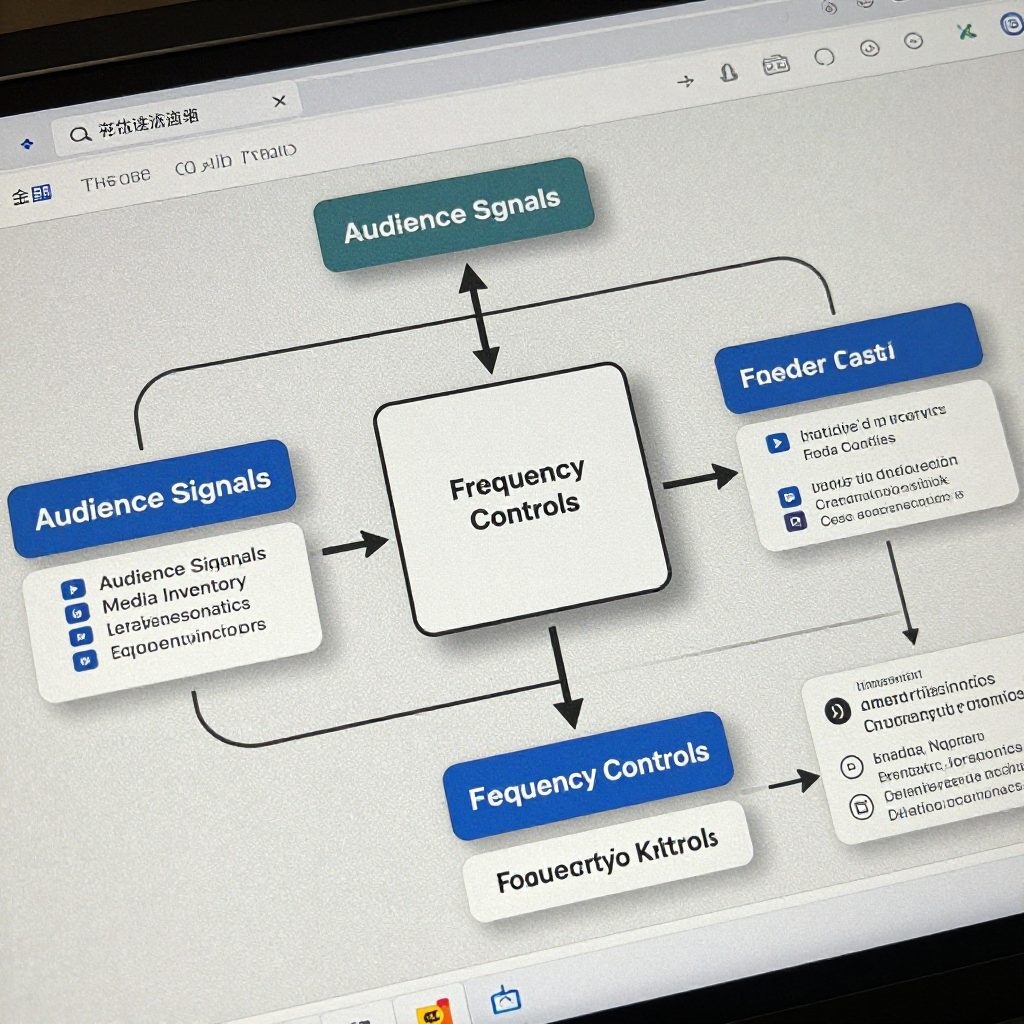
Personalization must be managed carefully. Too little variation can make ads irrelevant; too much can create operational complexity or feel intrusive. Frequency management is therefore as important as audience selection. A campaign that reaches the same narrow audience repeatedly may produce declining attention, complaints, or wasted impressions.
Benefits and Business Impact of Data-Driven Targeting
Data-driven targeting can improve advertising relevance, planning, optimization, and measurement, but outcomes depend on execution, market conditions, and the quality of available signals.
When audience definitions reflect real behavior or context, people may receive messages that are more useful than broad demographic advertising. Advertisers can also reduce some waste by excluding existing customers from acquisition campaigns, prioritizing high-intent prospects, or testing different creative for distinct needs.
Potential business benefits include:
- Improved relevance: Messages can align with a person’s stage in the customer journey or the content they are consuming.
- More efficient optimization: Campaign teams can shift budget toward placements, audiences, and creative variants that meet the chosen objective.
- Expanded reach: Lookalike modeling can help find new prospects beyond a brand’s known customer base.
- Better measurement: Advertisers can connect exposure and engagement with outcomes such as leads, sales, store visits, or retention.
- Faster learning: Frequent feedback allows teams to refine segments and messages while a campaign is active.
These benefits are not automatic. A narrow audience may improve apparent relevance while limiting scale and increasing media costs. A low-cost impression may generate volume without meaningful business value. Measurement can also be distorted by duplicate conversions, platform-specific attribution, or users moving across devices.
A sensible evaluation framework is to examine three layers: delivery, response, and business outcome. Reach and frequency describe delivery; attention and engagement describe response; qualified leads, revenue, retention, or other agreed outcomes describe value.
Privacy, Transparency, and the Limits of Personalization
Privacy-conscious targeting requires informed consent where applicable, data minimization, clear explanations, strong security, and meaningful user controls. Personalization should earn trust rather than depend on opaque surveillance.
Identity changes are reshaping advertising. Browser restrictions, platform policies, device fragmentation, and the decline of unrestricted third-party tracking make it harder to connect every interaction to one individual. Advertisers are responding with stronger first-party relationships, contextual targeting, privacy-enhancing technologies, aggregated measurement, and consent-aware identity solutions.
Responsible governance should address several risks:
- Overcollection: Gathering information simply because it might become useful later increases exposure without a defined benefit.
- Opaque profiling: People may find targeting unsettling when they cannot understand why an ad appeared or how to change their preferences.
- Algorithmic bias: Historical data can reproduce unequal access, exclusion, or inaccurate assumptions.
- Excessive frequency: Repeated personalization can turn relevance into irritation.
- Purpose drift: Data collected for one relationship or service may be used for advertising in ways people did not reasonably expect.
Advertisers should maintain audience documentation, apply access controls, review sensitive categories, and test whether targeting creates unequal outcomes. Contextual advertising can be a valuable complement because it uses the surrounding content rather than requiring detailed individual profiles. Relevance and restraint often work better together than maximum personalization.
Practical Steps for Building a Better Targeting Strategy
To build a stronger targeting strategy, connect business objectives, trusted data, testable segments, privacy controls, and outcome-based measurement in a repeatable workflow.
- Define the outcome. Decide whether the campaign is designed for awareness, qualified demand, sales, retention, or another measurable objective. Avoid optimizing to an easy proxy that does not reflect business value.
- Audit available data. Map first-party, second-party, third-party, contextual, behavioral, transactional, and engagement data. Record source, freshness, permission, quality, and permitted use.
- Create useful segments. Build groups around meaningful differences in need, intent, lifecycle stage, or value. Keep segments large enough to learn from and specific enough to guide creative or media decisions.
- Choose a balanced activation mix. Compare audience-based targeting with contextual placements, broad reach, retargeting, and lookalike audiences. No single method works equally well for every objective.
- Test one major variable at a time. Compare audience definitions, messages, placements, bids, or frequency rules with a clear success metric. Use holdouts or controlled comparisons when feasible.
- Measure beyond clicks. Review reach, frequency, viewability, attention, conversions, qualified outcomes, incremental lift, and cost per valuable action. Check for duplicated or platform-inflated reporting.
- Apply privacy controls continuously. Honor consent choices, provide opt-outs where required, limit retention, secure access, and remove data that no longer serves a defined purpose.
- Review and refresh. Monitor data decay, audience drift, creative fatigue, bias indicators, and changing platform conditions. A segment that worked last quarter may no longer represent current intent.
This framework keeps technology in its proper role: supporting better decisions rather than replacing strategy. The strongest targeting programs combine machine learning and automation with clear human accountability.
Frequently Asked Questions
What is big data in advertising?
Big data in advertising is the use of large, varied, and rapidly updated datasets to understand audiences, select media, personalize messages, and measure results.
How does big data improve audience segmentation?
It adds behavioral, contextual, transactional, engagement, and inferred signals to demographic information, helping advertisers create more relevant and dynamic audience groups.
What is the role of first-party data in targeting?
First-party data gives an organization direct insight into its customers and users. It can support segmentation, suppression, personalization, and measurement when collected and used with appropriate permission.
How does privacy affect data-driven advertising?
Privacy requirements encourage advertisers to use consent-based collection, data minimization, transparency, security, contextual alternatives, and aggregated measurement instead of unrestricted individual tracking.
Is highly personalized advertising always more effective?
No. Personalization can improve relevance, but excessive targeting may reduce scale, increase costs, create discomfort, or rely on inaccurate assumptions. The right level depends on the objective, audience, context, and trust relationship.