The Rise of Short-Form Video Content: TikTok, Instagram Reels, and Beyond
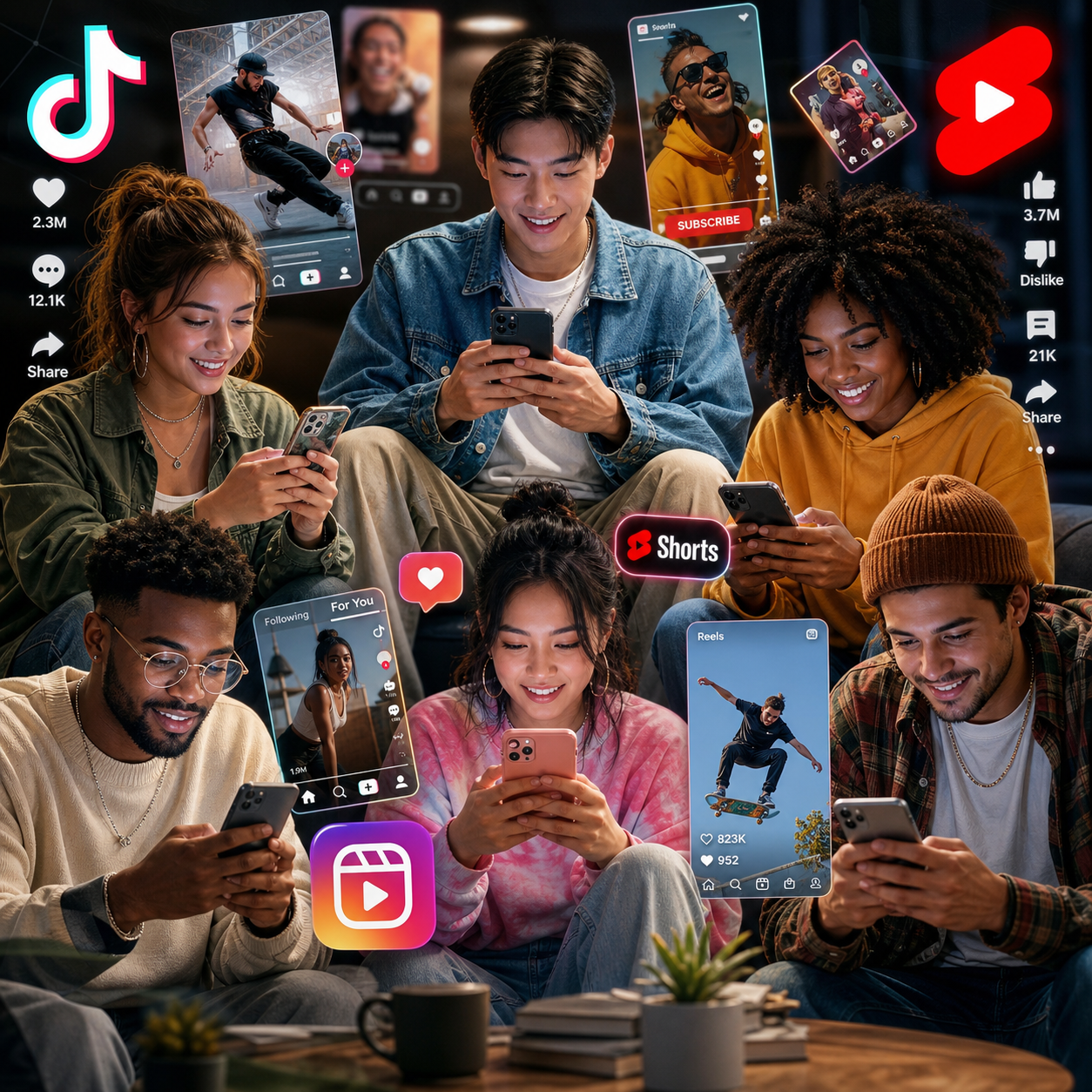
Short-form video has become a central language of digital media. What began as a fast-moving entertainment format now shapes brand discovery, creator partnerships, social commerce, and paid advertising. TikTok helped popularize the model, Instagram Reels expanded it across an established social ecosystem, and YouTube Shorts made vertical video part of the world’s largest video platform.
The opportunity is substantial, but short-form video is not a guaranteed shortcut to attention. Results depend on audience fit, creative relevance, platform behavior, and measurement that connects views with business outcomes.
What Is Driving the Rise of Short-Form Video?
The rise of short-form video is driven by mobile-first viewing, concise storytelling, and algorithmic discovery that introduces content beyond a user’s existing follower network. These forces have changed how audiences find media and how advertisers compete for attention.
Vertical video suits the way people hold smartphones, while short runtimes reduce the commitment required to start watching. A useful video can explain a product, demonstrate a technique, deliver a joke, or establish a mood within seconds. That does not mean every clip must be rushed. The strongest videos use a clear opening, quick context, and a satisfying payoff.
Algorithmic discovery is equally important. Traditional social distribution often depended on followers or subscriptions. Short-form feeds use signals such as watch time, completion rate, rewatches, shares, comments, and viewing history to recommend content. A small creator can therefore reach an audience interested in a subject without first building a large following.
Audience habits have also shifted toward continuous, personalized viewing. Users may open a platform with no specific search in mind and rely on the feed to provide the next piece of entertainment or information. For marketers, that creates opportunity, but it also raises the creative standard: the first seconds must earn attention from people who did not ask to see the message.
TikTok’s Role in Reshaping Digital Media
TikTok reshaped digital media by making discovery, creator culture, and participatory trends central to the viewing experience. Its feed encourages brands to compete on relevance and watchability rather than relying only on follower counts or polished production.
TikTok’s distinctive strength is the relationship between recommendation and participation. Sounds, formats, editing patterns, jokes, tutorials, and community references travel quickly through the platform. Users do not simply consume a trend; they adapt it. This creates a living creative environment in which a brand can join an existing conversation, provided it understands the culture and contributes something useful or entertaining.
The platform also accelerated the creator economy. Creators often understand audience expectations more precisely than a conventional brand team does. Their value comes from tone, credibility, and community fluency, not merely from reach. Influencer marketing on TikTok can support awareness and consideration, while creator-led demonstrations, reviews, and testimonials may help answer product questions.
For advertisers, the lesson is strategic. A television commercial repurposed without adjustment may feel slow or intrusive in a TikTok feed. Native creative typically begins with a strong visual or spoken hook, uses accessible language, and moves quickly toward a clear idea. Paid social media advertising can amplify effective organic concepts, but promotion cannot rescue content that lacks audience relevance.
Brands should also treat trends selectively. Joining every popular sound can weaken positioning, create rights complications, or make a company appear opportunistic. A better filter asks whether the trend fits the brand, the audience, the product promise, and the campaign objective.
Instagram Reels and the Expansion of Short-Form Video
Instagram Reels expanded short-form video by placing vertical content inside an established network of creators, followers, communities, shopping features, and brand accounts. Its integration with Instagram gives advertisers several ways to move audiences from discovery toward deeper consideration.
Reels can appear in the dedicated Reels experience, Explore, feeds, profile grids, and paid placements. That distribution creates useful connections between a short video and the rest of a brand’s presence. A viewer may discover a product through a Reel, visit the profile, review tagged products, read comments, and later encounter a retargeting ad.
Instagram also offers a different context from TikTok. Many users maintain long-standing relationships with friends, creators, publishers, and brands on the platform. As a result, Reels can work well when a campaign needs to combine reach with visual identity, community interaction, and social commerce.
Creative adaptation still matters. Reels should be designed for vertical viewing, with readable captions, a visible subject, and safe spacing around interface elements. A product tutorial may need a clean opening frame, while a fashion or food brand might benefit from visual rhythm and strong styling. The same concept can travel across platforms, but the edit, caption, audio choice, call to action, and landing experience should reflect Instagram behavior.
Beyond TikTok and Reels: A Broader Short-Form Video Ecosystem
The broader short-form video ecosystem includes YouTube Shorts and emerging channels, each with distinct audiences, recommendation systems, search behavior, and advertising environments. Advertisers should select platforms according to audience fit and campaign purpose rather than treating every vertical-video feed as interchangeable.
YouTube Shorts benefits from YouTube’s broader video infrastructure, including creator channels, search, subscriptions, long-form content, and advertising tools. A short clip can introduce a topic and direct viewers to a longer review, tutorial, interview, or product explanation. That makes Shorts particularly useful for brands with substantial educational or demonstration content.
Other channels may include Snapchat Spotlight, Pinterest video formats, LinkedIn video, connected-TV short clips, and newer networks that develop around specific communities. Their value varies by market and audience. A business-to-business brand, for example, may find a professional context more useful for expert clips than a general entertainment feed, even if the potential reach is smaller.
Use an audience-fit test before expanding distribution:
- Presence: Does the target audience actively use the platform?
- Behavior: Do users browse, search, shop, learn, or network there?
- Creative fit: Can the brand tell its story naturally in that environment?
- Commercial path: Is there a realistic route from viewing to the desired action?
- Operational cost: Can the team maintain quality without simply duplicating assets?
Choosing more platforms for reach means accepting greater production, community-management, rights, and measurement complexity. Expansion should follow evidence, not fear of missing out.
What Short-Form Video Means for Advertisers
For advertisers, short-form video requires native vertical creative, flexible distribution, creator collaboration, and clear separation between paid and organic roles. The strongest campaigns are built around audience needs rather than a single master video.
Creative teams should design several opening hooks for the same core idea. One version might lead with a problem, another with a surprising demonstration, and a third with a creator’s personal experience. Each can be tested against the same audience and objective. Captions should support sound-off viewing, while spoken audio and music can add emotion when rights allow.
Creator partnerships deserve careful planning. A creator needs enough freedom to preserve a credible voice, but the agreement should define claims, disclosures, usage rights, approval stages, exclusivity, and paid-media permissions. The U.S. Federal Trade Commission’s guidance for social media influencers is a useful reference for transparent endorsements.
Paid and organic distribution serve different functions. Organic content can reveal what resonates and build community signals. Paid media provides controlled reach, frequency, audience targeting, and conversion measurement. Social commerce features may shorten the path to purchase, but they do not eliminate the need for trust, clear product information, and a reliable checkout experience.
Brand safety also requires more than blocking keywords. Review creator suitability, comments, music licensing, user-generated content, adjacency controls, disclosure practices, and crisis procedures. A fast-moving trend can produce attention quickly, but it can also create reputational exposure just as quickly.
Measuring Short-Form Video Performance
Short-form video performance should be measured across attention, interaction, action, and business impact. Reach and views show distribution, while watch time, completion, engagement metrics, conversions, and incremental outcomes explain whether the exposure had value.
A practical measurement ladder looks like this:
- Awareness: reach, impressions, unique viewers, frequency, and cost per thousand impressions.
- Attention: average watch time, percentage watched, completion rate, replays, and early drop-off.
- Engagement: likes, comments, saves, shares, profile visits, and follows.
- Consideration: landing-page visits, product-page views, searches, sign-ups, and qualified enquiries.
- Conversion: purchases, applications, downloads, revenue, cost per acquisition, and return on ad spend.
- Incrementality: lift in awareness, sales, or site behavior compared with a suitable control or baseline.
Do not treat every metric as interchangeable. A high completion rate may indicate strong storytelling, but it does not prove that viewers intend to buy. Shares can signal relevance, although a humorous video may be shared widely without creating demand for the product.
Use platform analytics for diagnosis and independent business data for validation. Track consistent naming conventions, landing-page parameters, conversion windows, and creative versions. When possible, compare exposed and unexposed audiences or run geo-based tests. This helps distinguish correlation from genuine campaign contribution.
Building a Sustainable Short-Form Video Strategy
To build a sustainable short-form video strategy, define the objective, study the audience, create a repeatable testing system, adapt content by platform, and optimize using both media and business evidence. Consistency matters more than chasing one viral video.
1. Start with the job the video must do
Separate awareness, engagement, consideration, and conversion. An awareness clip may prioritize a memorable brand cue, while a conversion video needs proof, an understandable offer, and a frictionless next step. One asset rarely performs all jobs equally well.
2. Build a small testing matrix
Test one variable at a time where practical: hook, creator, length, opening visual, caption style, offer, or call to action. A useful initial portfolio might contain educational, demonstrative, testimonial, behind-the-scenes, and culture-led concepts. Review performance after enough delivery to identify patterns, rather than changing direction after a few hours.
3. Create an efficient production workflow
Develop a content bank from recurring customer questions, product use cases, objections, seasonal moments, and creator ideas. Record multiple openings and endings during each shoot. This reduces the cost of iteration while preserving a native feel.
4. Adapt, then distribute
Repurpose the central insight, not necessarily the finished file. Re-edit the pacing, on-screen text, audio, caption, aspect-safe composition, and call to action for TikTok, Instagram Reels, YouTube Shorts, or another channel. Keep a clear record of music and creator usage rights.
5. Review on a fixed rhythm
Run weekly creative checks for early retention and qualitative feedback, then conduct monthly reviews of reach, conversion, cost, and incremental impact. Pause weak concepts, refresh fatigued winners, and preserve a testing budget. Sustainable short-form video is a portfolio of experiments, not a demand for endless posting.
Frequently Asked Questions
What is short-form video content?
Short-form video content consists of brief, usually vertical videos designed for quick mobile viewing and feed-based discovery. Length varies by platform and format; the defining feature is concise, easily consumed storytelling.
Why is short-form video effective for advertisers?
It can earn attention in personalized feeds, demonstrate products quickly, and connect brands with creator communities. Its effectiveness still depends on relevance, creative quality, audience fit, and a measurable path to action.
What is the difference between TikTok and Instagram Reels?
TikTok is strongly associated with interest-based discovery, participatory trends, and creator-led entertainment. Instagram Reels operates within Instagram’s wider network of followers, profiles, messaging, commerce, and established creator relationships.
Should brands use the same video on every platform?
Brands can reuse a central idea, but they should adapt the hook, edit, captions, sound, call to action, and landing experience for each platform. Identical uploads often ignore differences in audience behavior and interface design.
Which metrics matter most for short-form video campaigns?
The most useful metrics depend on the objective. Watch time and completion rate matter for attention, shares and saves help assess resonance, and conversions, acquisition cost, revenue, and incrementality matter for business performance.