How Streaming Wars Are Reshaping the Entertainment Industry
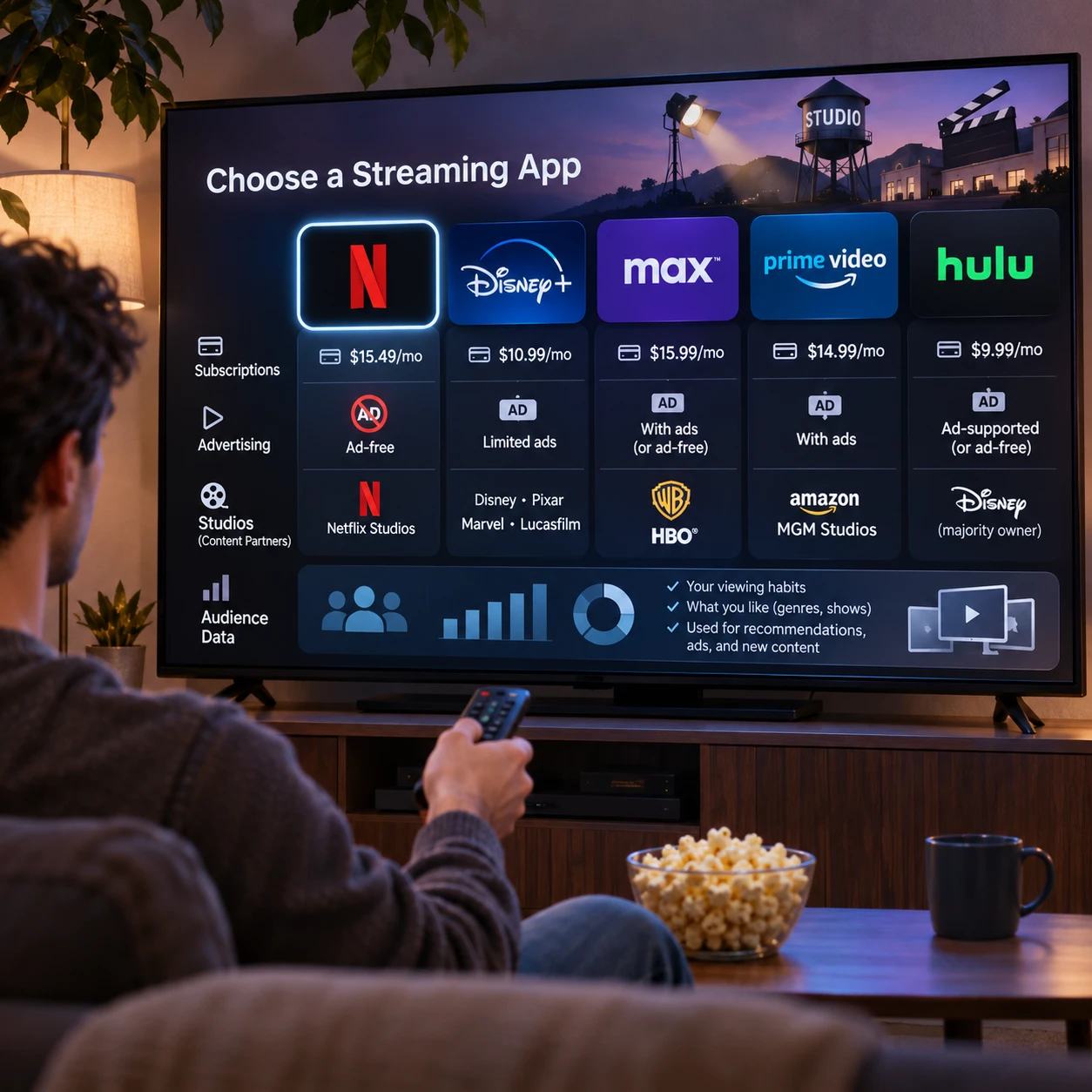
The streaming wars are changing more than which app appears on a television screen. Competition among streaming services is reshaping how entertainment is financed, distributed, discovered, and measured, while pushing media companies to rethink how they earn revenue from both audiences and advertisers.
For viewers, the shift shows up in prices, content access, and the number of services they may need. For studios, creators, and marketers, it is a broader business reset: subscription growth matters, but so do licensing income, advertising reach, retention, and reliable measurement.
What the streaming wars mean for entertainment
The streaming wars are the competition among streaming services for viewers, content, and revenue. They matter beyond platform rivalry because they are changing how entertainment companies produce, distribute, and monetize programming.
In the early growth phase, services emphasized convenience and subscriber acquisition. Companies invested in apps, expanded catalogs, and commissioned original programming to give customers reasons to sign up. Today, the contest is more complex. A service must attract viewers, keep them engaged, manage content costs, and show a credible path to sustainable returns.
That shift links streaming to the rest of the media business. A studio deciding whether to keep a film exclusive, license a series to another platform, or sell rights in multiple markets is making a distribution and revenue decision, not simply choosing where a title will appear. Broadcasters, cinemas, pay-TV providers, and online video platforms remain part of the entertainment landscape, even as streaming changes their roles.
The central change is a move from growth at any cost toward a portfolio of revenue streams. Subscriber fees remain important, but content licensing, advertising, bundles, and international distribution can also affect a company’s results. The mix varies by service and audience; there is no single model that fits every catalog or market.
The shift from subscriber growth to sustainable business models
Streaming services are moving beyond subscriber growth by combining subscription revenue, advertising, price changes, and tighter cost control. The aim is to make each audience relationship more valuable without driving too many viewers away.
Subscription video-on-demand (SVOD) charges a recurring fee for access to a catalog. It offers predictable revenue and an ad-free experience when the plan excludes commercials. However, subscribers can cancel easily, and multiple monthly fees can make a household reassess which services to keep.
Ad-supported video-on-demand (AVOD) earns revenue from advertising rather than, or alongside, a subscription fee. Hybrid subscription tiers combine both approaches, often offering a lower-priced plan with ads and a more expensive option with fewer or no ads. These tiers can reach price-conscious viewers and create advertising inventory, though they also require services to balance ad load and user experience.
Companies are also reviewing how long titles stay exclusive, how much they spend on new programming, and whether pricing reflects different levels of access. A lower-priced ad tier may help broaden reach, but it can bring lower revenue per viewer than a premium plan unless advertising demand and delivery support the economics. Price increases may improve revenue from loyal customers, yet risk cancellations when a service feels less essential.
For media planners, the practical question is not simply whether a platform has subscribers. It is whether a particular audience, viewing context, and buying method align with campaign goals. Services need to weigh acquisition, retention, content expense, and ad sales together rather than treating them as separate strategies.
Content strategy: originals, licensing, and exclusivity
Streaming competition shapes content strategy by changing how services invest in original programming, acquire licensed titles, and manage exclusivity. Each choice affects a catalog’s appeal, its costs, and the opportunities to earn revenue across platforms and territories.
Original programming can distinguish one service from another and give viewers a reason to subscribe. A successful series may also encourage repeat viewing and strengthen a brand. But original production can be expensive, and no title guarantees an audience. Services therefore have to judge projects by more than launch-week attention: retention, viewing across a season, international appeal, and long-term library value all matter.
Content licensing offers a different set of advantages. Licensing lets a rights holder earn money from a program made for another outlet or from a back catalog that would otherwise have limited exposure. For the buyer, a familiar series can fill a programming gap without carrying the full cost and risk of creating a new production. The trade-off is that licensed rights can expire, vary by territory, or be available to competitors.
Exclusivity can help a service build a distinctive identity, but it also limits a title’s distribution and may reduce the number of viewers who can discover it. Some companies may find that licensing content elsewhere is more valuable than keeping every title behind one paywall. Release patterns are changing too: services can favor a full-season drop, weekly episodes, or a mix of both, depending on the title and the goal of sustaining conversation and engagement.
A useful decision test for a content owner is to ask three questions: Does exclusivity meaningfully support customer acquisition or retention? Could licensing produce more value across buyers and territories? Will the title strengthen the catalog over time? The right answer can differ for a tentpole original and a well-known library series.
What changing viewer habits mean for the market
Changing viewer habits are increasing audience fragmentation: people divide their attention across streaming services, social video, broadcast, cinema, and other entertainment. That makes discoverability and convenient access as important as the size of any one catalog.
Viewers often choose a service for a particular show, watch it, and then reconsider whether to keep the subscription. Others rotate services seasonally or share household access where plans allow. This behavior gives customers flexibility, but makes retention harder for platforms that rely only on a steady monthly fee.
As subscriptions accumulate, bundling and consolidated access become more attractive. A bundle can combine streaming services with a telecom, pay-TV, or other subscription offer, reducing the effort of managing separate accounts and payments. Bundles may also help providers lower churn or introduce customers to a service they might not have selected alone. The compromise is that partners must agree on pricing, packaging, customer data, and how to share revenue.
Discovery remains a persistent problem. A deep catalog is less useful if viewers cannot find relevant programs, and recommendations can keep attention within familiar genres instead of exposing people to new titles. Media companies can respond with clearer editorial curation, better search, and cross-promotion, but no recommendation system removes the basic competition for a viewer’s limited time.
For advertisers, fragmentation means that broad reach may require a mix of streaming services and other channels. A campaign that performs well on one platform may not represent the whole audience, particularly when households use different apps or switch between devices.
How streaming competition is changing advertising
Streaming competition is changing advertising by expanding ad-supported tiers and giving marketers new ways to reach viewers in on-demand environments. It also makes audience reach, frequency control, and cross-platform measurement harder to manage.
AVOD and hybrid subscription tiers create inventory in a setting where viewers may watch on connected TVs, phones, tablets, or computers. Advertisers can use audience signals and contextual information to make campaigns more relevant than a broad, one-size-fits-all placement. The available targeting and reporting vary by service, market, and buying method, so marketers should confirm what data and controls a platform actually provides.
Advertising measurement is a key pressure point. A streaming service may report delivery within its own system, while a brand needs to understand reach and frequency across platforms and other media. Differences in definitions, identity signals, and reporting windows can make direct comparisons difficult. A campaign can appear to reach many people across separate dashboards while repeatedly showing ads to the same viewers.
Before buying, advertisers should define the outcome they need: broad reach, incremental audience, completed views, or a response such as a site visit. They can then ask how impressions are verified, how frequency is managed, what counts as a completed view, and whether results can be compared with other channels. More targeting is not automatically better. Narrow segments may reduce waste, but can limit scale or depend on data that is not consistent across providers.
Ad-supported viewing has a viewer-side trade-off as well. Lower prices can widen access, but ads interrupt programming and may vary in frequency or relevance. Services must manage that experience carefully if they want viewers to keep using the lower-priced tier.
The consequences for creators and the wider industry
Streaming competition gives creators and rights holders more potential buyers and distribution routes, but it also changes how projects are financed, marketed, and valued. The outcome depends on contract terms, rights ownership, audience reach, and the platform’s long-term plans.
For studios and independent producers, more services can mean more places to pitch a project or license a completed title. A platform may offer access to audiences in several regions, while a rights holder can sometimes generate additional income from later licensing. Yet exclusivity agreements can restrict those options, and a platform’s control of distribution may affect how a title is promoted and discovered.
Creators and talent should look closely at the rights and compensation structure, not just the size of an initial deal. Relevant questions include which territories and formats are covered, how long exclusivity lasts, whether sequel or spin-off rights are included, and what audience reporting will be available. These terms can shape the future value of a project, although negotiating power varies widely across productions.
Distributors, cinemas, broadcasters, and advertisers face their own adjustments. Some titles work well across several windows, while others benefit from a focused exclusive launch. Marketing teams need to plan for fragmented attention and avoid assuming that one platform’s viewing data captures total audience behavior. A streaming strategy can expand opportunity, but it can also make revenue and performance less visible when rights, data, and distribution are split among partners.
What to watch as streaming strategies evolve
As streaming strategies evolve, watch how companies balance pricing, ad-supported tiers, content investment, licensing, and distribution partnerships. These choices will reveal whether a service can retain audiences and earn sustainable revenue, rather than simply attract sign-ups.
Media and advertising professionals can use a simple four-part check when assessing a streaming strategy:
- Audience: Does the service reach people the campaign or content needs, and can it add incremental reach?
- Economics: How do subscription, advertising, and licensing revenue compare with acquisition and content costs?
- Rights: Who controls distribution, exclusivity, and future licensing across formats and territories?
- Evidence: Can the company measure retention, viewing, reach, and advertising outcomes consistently enough to guide decisions?
Keep an eye on bundles, the balance between original programming and licensed catalogs, and the quality of advertising measurement. These are active strategic choices, not guarantees of future market outcomes. Established shifts, such as the growth of hybrid subscription tiers, should be separated from predictions about which business models will prevail.
The streaming wars are likely to remain a contest over attention and economics as much as technology. Flexible companies will be better positioned to adjust their mix of subscriptions, advertising, licensing, and partnerships as viewer habits and advertiser needs change. For marketers, the practical advantage comes from evaluating each service against audience, measurement, and business objectives rather than treating streaming as one uniform channel.